The Best Workwear & PPE for Warehouse and Logistics Teams
 Warehouse and logistics employees are responsible for keeping goods moving, orders fulfilled and deliveries running smoothly. Whether they’re picking and packing products, loading vehicles, operating forklifts or managing stock, the right workwear can make a real difference to comfort, safety and productivity.
However, warehouse workwear isn’t one-size-fits-all. Someone working in a busy distribution centre may need different clothing and protective equipment from an employee in a chilled warehouse or a delivery driver regularly moving between indoor and outdoor environments.
For employers, the challenge is finding clothing that is practical, comfortable and durable while maintaining a professional and consistent appearance across the workforce.
In this guide, we’ll look at the best workwear and PPE for warehouse and logistics teams, including safety footwear, high-visibility clothing, gloves, branded uniforms and seasonal workwear.
What Workwear Do Warehouse Employees Need?
Warehouse employees often spend long periods standing, walking, lifting and moving between different areas of a building.
Clothing needs to be comfortable enough for an entire shift while allowing employees to carry out their duties without unnecessary restrictions.
A typical warehouse workwear package might include:
- Branded polo shirts or T-shirts
- Comfortable work trousers
- Safety footwear appropriate to the workplace
- High-visibility clothing where required
- Protective gloves for suitable handling tasks
- Sweatshirts or fleeces for cooler environments
- Weatherproof jackets for outdoor duties
- Additional task-specific PPE
The exact requirements should be based on the work being carried out and the risks identified within the workplace.
Comfortable Workwear for Long Shifts
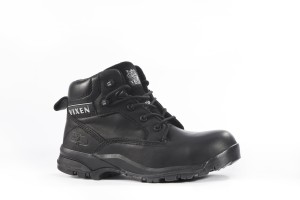 Comfort is particularly important in warehouse environments because employees may spend most of their working day on their feet.
Heavy, restrictive clothing can become uncomfortable when workers are repeatedly bending, stretching, lifting or walking between picking locations.
Look for garments that provide:
- Good freedom of movement
- Breathable fabrics
- Durable stitching
- Comfortable fits
- Easy-care materials
- Practical pockets where appropriate
For many indoor warehouse roles, lightweight branded polo shirts or T-shirts combined with comfortable work trousers can provide a practical everyday uniform.
Branded Polo Shirts and T-Shirts
Branded workwear is a simple way to create a consistent appearance across a warehouse or logistics operation.
Polo shirts are particularly popular for warehouse supervisors, customer-facing employees and general operational teams because they look smart without being overly formal.
T-shirts can provide a lighter alternative for physically demanding work or warmer environments.
Adding a company logo through printing or embroidery helps employees feel part of the same team while making staff easier to identify.
For larger operations, different garment colours can also help distinguish departments, supervisors or particular job roles.
Choosing Work Trousers for Warehouse Staff
Warehouse trousers should be durable enough for regular use while remaining comfortable during long shifts.
Employees working in picking, packing and goods handling roles may benefit from trousers with stretch panels, reinforced seams and useful pockets.
However, bulky trousers with excessive external pockets aren’t always necessary for warehouse work.
For employees working around conveyors, machinery or moving equipment, clothing should also be selected to minimise snagging and entanglement risks.
The best option will depend on the tasks being carried out rather than simply choosing the heaviest-duty trousers available.
Safety Footwear for Warehouse Workers
Safety footwear is one of the most important considerations in many warehouse and distribution environments.
Potential hazards can include dropped goods, pallet trucks, forklifts, sharp objects and slippery floors.
Where a risk assessment identifies the need for protective footwear, employees should be provided with suitable products offering the required level of protection.
Features worth considering include:
- Protective toe caps
- Appropriate slip resistance
- Underfoot puncture protection where required
- Lightweight construction
- Comfortable cushioning
- Breathable materials
- Durable soles
Comfort is particularly important for employees walking significant distances throughout a shift.
Safety Trainers vs Safety Boots in Warehouses
Safety trainers have become increasingly popular in warehouse environments because they often provide a lighter alternative to traditional safety boots.
For employees working primarily indoors on relatively even surfaces, suitable safety trainers can offer a comfortable combination of protection and flexibility.
Safety boots may be more appropriate for roles involving outdoor work, demanding environments or additional support requirements.
Neither option is automatically better. Employers should select footwear based on the hazards present, the required safety rating and the needs of the individual wearer.
Do Warehouse Workers Need Hi-Vis Clothing?
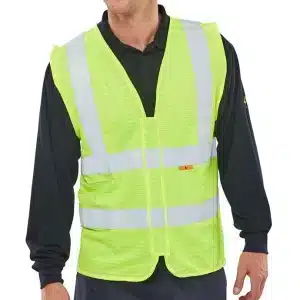 Many warehouses have forklifts, pallet trucks, delivery vehicles and other moving equipment operating alongside employees.
High-visibility clothing can help make workers more noticeable in these environments, particularly where visibility is restricted or vehicle movements are frequent.
Common warehouse hi-vis options include:
- Hi-vis waistcoats
- Hi-vis polo shirts
- Hi-vis T-shirts
- Hi-vis sweatshirts
- Hi-vis jackets
The appropriate garment and visibility classification should be selected according to the workplace risk assessment.
It’s also important to remember that hi-vis clothing is not a replacement for suitable traffic management, pedestrian routes and vehicle segregation.
Lightweight Hi-Vis for Indoor Warehouses
Some warehouses can become surprisingly warm, particularly during summer or in areas where employees are carrying out physically demanding tasks.
Heavy hi-vis jackets may be unnecessary or uncomfortable in these conditions.
Where suitable for the workplace, lightweight hi-vis waistcoats, T-shirts or polo shirts can help maintain visibility without adding excessive layers.
Employers should also make sure hi-vis garments fit correctly and don’t create unnecessary snagging hazards around machinery.
Protective Gloves for Warehouse Work
Warehouse employees regularly handle boxes, packaging, pallets, tools and other materials.
Suitable gloves can help protect against hazards such as abrasion, cuts and other handling risks.
Different tasks may require different types of gloves, including:
- General handling gloves
- Grip gloves
- Cut-resistant gloves
- Thermal gloves
- Coated work gloves
It’s important to choose gloves based on the actual hazards rather than simply issuing the same pair to everyone.
Gloves can also introduce risks when used around certain rotating or moving machinery, so their suitability should always be assessed for the task.
Workwear for Forklift Operators
Forklift operators may spend long periods seated while also regularly entering and leaving their vehicles.
Comfortable clothing that allows unrestricted movement is important, particularly when turning to check surroundings or getting in and out of the cab.
Depending on the working environment, forklift operators may require:
- Suitable safety footwear
- High-visibility clothing
- Comfortable work trousers
- Branded polo shirts or T-shirts
- Additional protection for outdoor operations
Clothing should not interfere with seat belts, controls or the safe operation of equipment.
Workwear for Delivery Drivers and Logistics Teams
Delivery drivers and logistics employees often move between very different environments throughout the working day.
They may spend considerable time inside vehicles before unloading goods outdoors, entering warehouses or visiting customer premises.
Layered clothing can be particularly useful for these roles.
A branded polo shirt combined with a fleece or softshell jacket provides flexibility as temperatures change.
Where required, suitable hi-vis clothing and protective footwear should also be available for loading areas, depots and delivery locations.
Winter Workwear for Warehouses
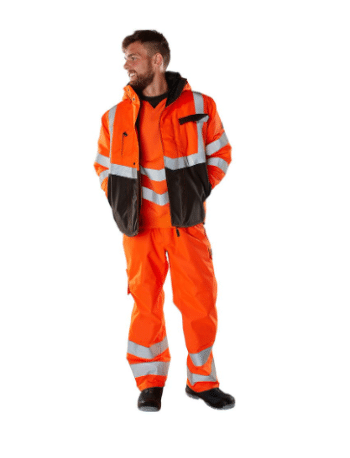
ot every warehouse is heated to the same temperature.
Large industrial buildings, loading bays and distribution centres can become particularly cold during autumn and winter.
Employees working near open loading doors or regularly moving between indoor and outdoor areas may need additional layers.
Useful winter workwear options include:
- Branded sweatshirts
- Fleeces
- Softshell jackets
- Insulated bodywarmers
- Thermal base layers
- Weatherproof outerwear
- Suitable gloves
Layering allows employees to adjust their clothing as working conditions change throughout the shift.
Workwear for Chilled and Cold Storage Warehouses
Employees working in refrigerated warehouses or cold storage facilities face additional challenges.
Standard warehouse uniforms may not provide sufficient protection against prolonged exposure to low temperatures.
Depending on the environment and tasks involved, workers may need specialist insulated clothing, thermal gloves, suitable footwear and other cold-weather protection.
Employers should assess the working temperature, exposure duration, activity levels and individual requirements when selecting clothing for these environments.
Summer Workwear for Busy Distribution Centres
At the opposite end of the scale, some warehouses can become uncomfortable during warmer weather.
Lightweight, breathable workwear can help improve comfort, particularly for employees involved in physically demanding picking and packing operations.
However, clothing should still be suitable for the task and compatible with any required PPE.
Employers should also consider ventilation, drinking water, rest arrangements and other measures for managing workplace heat.
Why Branded Workwear Matters in Logistics
Professional uniforms aren’t only useful for businesses that regularly meet customers.
Within a warehouse or distribution centre, consistent clothing can help create a sense of identity and make employees easier to recognise.
For logistics companies, branded uniforms also help present a professional image when drivers and operational staff visit customers, suppliers and other business premises.
Using the same logo and colour scheme across polo shirts, jackets and other suitable garments can help reinforce your company’s identity.
Managing Workwear for Larger Warehouse Teams
Ordering uniforms for a handful of employees is relatively straightforward, but managing workwear across a larger workforce requires a little more planning.
It’s worth considering:
- Standard garments for different departments
- Employee sizes
- Seasonal clothing requirements
- Replacement uniforms
- New starter workwear packages
- Consistent branding
- Suitable PPE for different roles
Creating a standard workwear package for each job role can simplify ordering and help maintain consistency across the business.
How Often Should Warehouse Workwear Be Replaced?
Everyday uniforms should be replaced when they become excessively worn, damaged or unsuitable for continued use.
PPE requires particular attention because it must continue providing the protection required for the task.
Safety footwear, hi-vis clothing, gloves and other protective equipment should be inspected and maintained according to the manufacturer’s guidance and workplace requirements.
Encouraging employees to report damaged clothing and equipment can help identify replacement needs before they become more serious problems.
A Practical Warehouse Workwear Checklist
When reviewing your warehouse or logistics team’s clothing, consider whether employees have:
- Comfortable everyday uniforms
- Suitable work trousers
- Appropriate safety footwear
- High-visibility clothing where required
- Task-specific protective gloves
- Warm clothing for colder environments
- Lightweight clothing for warmer conditions
- Weatherproof outerwear for outdoor duties
- Any additional PPE identified by the risk assessment
The goal is to provide clothing that supports the work employees actually carry out rather than relying on a single uniform for every role.
Frequently Asked Questions
What should warehouse workers wear?
Warehouse workers typically benefit from comfortable, durable clothing that allows good freedom of movement. Depending on the workplace, they may also need safety footwear, high-visibility clothing, protective gloves and other task-specific PPE.
Are safety boots compulsory in warehouses?
Safety footwear is required where the workplace risk assessment identifies hazards that make protective footwear necessary. The appropriate type and level of protection will depend on the work being carried out.
Can warehouse workers wear safety trainers?
Yes, suitable safety trainers can be appropriate for many warehouse roles, provided they offer the protection required for the workplace and fit the wearer correctly.
Do all warehouse workers need hi-vis?
Not necessarily. Hi-vis requirements depend on the workplace risk assessment, vehicle movements, visibility conditions and other relevant hazards.
What gloves are best for warehouse work?
The most suitable gloves depend on the materials being handled and the risks involved. General handling, grip and cut-resistant gloves may all be appropriate for different tasks.
Can warehouse uniforms be embroidered with a company logo?
Yes. Polo shirts, sweatshirts, fleeces, jackets and many other workwear garments can be embroidered or printed with company branding. Any customisation of certified PPE must not compromise its protective performance.
Find the Right Workwear for Your Warehouse or Logistics Team
The best warehouse workwear combines comfort, durability and practicality with the protection required for each role.
From lightweight branded uniforms and safety trainers to hi-vis clothing, protective gloves and winter outerwear, choosing the right products can help employees work comfortably while maintaining a professional appearance.
At Work & Wear Direct, we supply branded workwear, safety footwear, high-visibility clothing and PPE for warehouse, distribution and logistics businesses throughout the UK.
Whether you’re equipping a small warehouse team or arranging uniforms for a larger operation, we can help you find practical workwear suited to your requirements.
Browse our range of workwear and PPE or contact Work & Wear Direct to discuss clothing and protective equipment for your warehouse or logistics team.